Desert Safari Photography: Sunset Stops and Simple Planning
Plan desert safari photography around included photo stops, sunset conditions, simple equipment, group pictures and optional photography services.
By Friends Guide Travels Team · · 12 min read
Desert safari photography is easier to enjoy when you treat the photo stop as part of the outing rather than expecting the whole tour to operate like a private shoot. Think about the light, your group, the time available and what your selected package actually includes. You do not need professional equipment to return with pictures that tell the story of your day.
This guide focuses on planning photographs during a Dubai safari: choosing a suitable itinerary, asking about stops, carrying equipment sensibly and understanding optional photography services. It does not promise a particular sunset, clear sky or empty dune. Conditions and the operating plan shape the experience, so a flexible approach is more useful than a rigid list of exact shots.
Decide which part of the day you want to remember
Before choosing a package, think about the photographs you actually want. A wide dune scene, a picture of friends, a vehicle in the landscape and a camp memory are different subjects. Pick a few priorities rather than trying to reproduce every image you have seen online. This helps you enjoy the day instead of treating each stop as a missed opportunity.
The evening safari describes a sunset photography stop. The morning safari offers a shorter outing with a photo stop in a different part of the day. Compare the whole programme as well as the light. A suitable itinerary matters more than chasing one image at the expense of everyone else's comfort.
Treat sunset as a window, not a guaranteed photograph
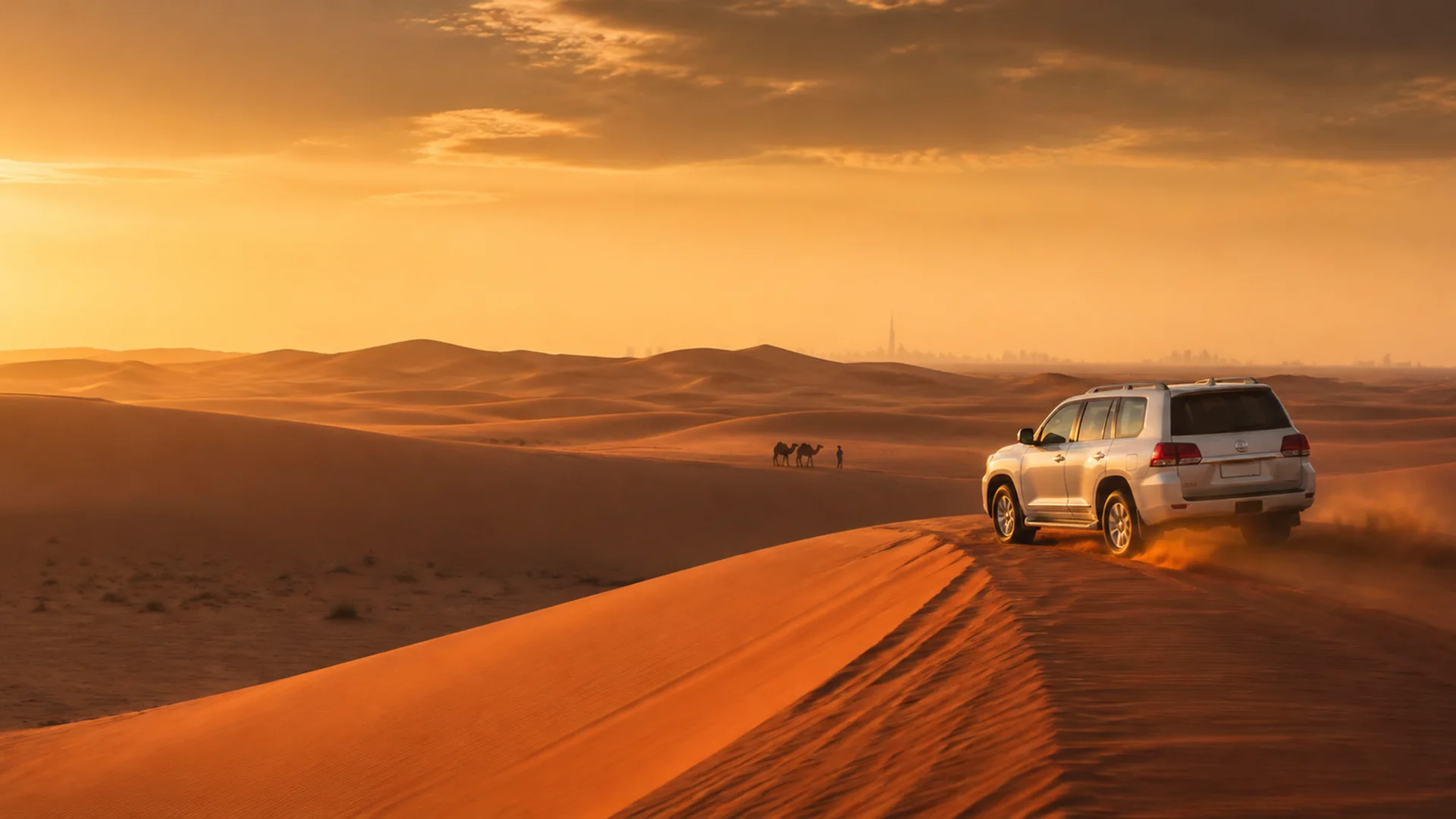
Sunset changes with the date, and the appearance of the sky depends on conditions. A tour description mentioning sunset does not guarantee a particular colour, cloud pattern or clear view. Ask how the stop is planned for your date, then keep expectations flexible. You can still make a memorable image when the scene looks different from a promotional photograph.
Do not book a trip only because an online picture shows a dramatic sky. The photograph may have been taken on another day, at another point in the itinerary or with different equipment. Use it as inspiration, not a contract. Your safari is a real outing with changing light, other guests and a practical route through the desert.
Understand the photo-stop arrangement
Ask whether the stop is part of a shared itinerary, how the group is directed and whether any particular request can be accommodated. A shared safari needs to balance all its travellers. Arrive ready to take a few pictures within the time and area indicated by staff. Do not assume the driver can extend every stop because one person is still searching for a perfect angle.
The private safari describes a more flexible pace and longer photo stops as part of its offering. That may interest a family who values group photographs, but it still needs confirmation for your actual trip. An exclusive vehicle is not automatically a dedicated professional photography tour or permission to ignore the operating timetable.
Explain your priority before travel
A useful request is that your family would like a calm group picture during the included stop. That is more practical than asking for unlimited photography time. If you want a substantial shoot with equipment, a professional photographer or a special setup, discuss it as a separate requirement before choosing the package.
Build a small shot list
Choose a short list you can remember without consulting your phone constantly. A wide landscape, one group picture, a closer detail and a candid moment can tell a complete story. Add a camp photograph if the evening includes dinner. A small plan gives you direction while leaving room for something unexpected that catches your attention.
Share the group-picture idea with friends before the stop. Ask them whether they want to be included and keep the arrangement simple. Spending the entire break organising many versions can leave everyone tired and stop others from enjoying the landscape. Take the essential picture, then give people room to look around and make their own memories.
Use your phone thoughtfully
A clean lens and enough battery can matter more than a new camera. Before leaving, check storage space and make sure your usual camera app works as expected. Learn one or two familiar settings in advance rather than trying to understand a complicated mode while the group waits. Simple preparation helps you stay present during the actual stop.
Take a moment to look at the scene before pressing the shutter. Notice the direction of the light, the shapes of the dunes and anything distracting at the edge of the frame. Make a few considered pictures instead of hundreds of nearly identical ones. You will have less sorting to do later and more time to enjoy the view with your group.
Keep people comfortable in the picture
Ask before photographing a close portrait, especially if the person is not part of your party. Let friends decide whether they want a posed image or a quick candid-style picture. A good holiday photograph should not depend on pressuring somebody who is tired, uncomfortable or simply prefers to enjoy the view without posing.
For children, keep the plan brief. Explain where the adult will stand and what the child should do, following the guide's directions about the permitted area. Do not ask children to climb, run away from the group or approach a moving activity for a dramatic picture. A natural expression in a straightforward setting usually tells the family's story well.
Follow the staff's directions about location
The activity team knows how the stop fits the route and where guests should remain. Use the area they indicate. Do not walk away from the group to find an apparently empty background, stand in vehicle routes or ask someone to continue moving while you take a picture. The landscape is part of an operating tour, not a studio closed for your party.
If a desired angle is outside the agreed area, ask rather than trying it first. The answer may be no, and that should settle the question. Work with the scene you can use. A photograph taken from a permitted position is more valuable than a dramatic idea that disrupts the trip or puts pressure on the people managing it.
Photograph activities only in permitted ways
A quad-bike session and a camel ride have their own operating instructions. Do not assume a camera can be held during participation or that a friend can stand beside the activity route. Ask the relevant team how photographs can be taken. Your photo plan should follow the activity rules, not change them.
The quad-bike safari describes a designated-area session with a briefing. Treat riding and photographing as separate tasks unless staff explicitly direct otherwise. For camel photographs, follow the handler's arrangement and ask before approaching. A memorable image should come from the permitted experience rather than improvisation around animals or moving vehicles.
Carry only equipment you can manage
A small camera or phone is easy to keep with you, while tripods, several lenses and bulky cases create more handling during transfers and activities. Tell the booking team if you plan to bring substantial equipment. Ask about vehicle storage, space and whether the intended setup can be accommodated at the stops. Do not assume a passenger booking includes room for a full production kit.
Keep gear organised in a bag you can manage without delaying the group. Ask where it should be kept during activities, and follow the operator's instructions. Avoid placing equipment where guests walk or where service takes place at camp. The right kit is the kit you can use comfortably within the confirmed itinerary, not necessarily everything you own.
Plan for dust and changing conditions
The desert setting can be dusty, and conditions can change. Use the protection recommended for your own equipment and avoid unnecessary handling in exposed conditions. Keep lens changes and detailed adjustments for suitable moments. An article cannot replace the manufacturer's care instructions, but a little forethought can reduce rushed handling when you are outside with a group.
Do not make weather a personal test of the trip's success. Wind, haze or a different sky can suggest other kinds of pictures, such as closer details or group memories. If staff change the stop or activity plan because of conditions, follow the revised instructions. Enjoying the landscape does not require forcing the original shot list to happen unchanged.
Choose clothing for the outing first
An outfit can look attractive in a photograph and still be inconvenient for the actual activities. Read the clothing guide, check the operator's activity requirements and choose practical items. Keep the full day in mind: pickup, walking, activities, camp and return. A photograph is only one part of that plan.
Avoid bringing a complicated change of outfit without discussing it. A standard safari does not promise a changing room, a private styling space or time for repeated wardrobe changes. If a special portrait session is your main purpose, tell the team before booking so they can explain whether a different arrangement would suit you better.
Understand professional photography offers
The standard evening and private safari descriptions exclude professional photography from their included arrangements. If a service is offered, ask what it costs, how many images you receive, whether they are digital or printed and how delivery works. Do not assume that posing for a sample picture means you have agreed to buy a package.
Make the decision clearly before accepting a paid service. If friends are sharing the cost, agree who is purchasing and who will receive the images. A professional photo can be a nice extra, but it should remain an understandable purchase. You can also enjoy the included stop using your own camera without buying a separate photography product.
Keep camp photographs considerate
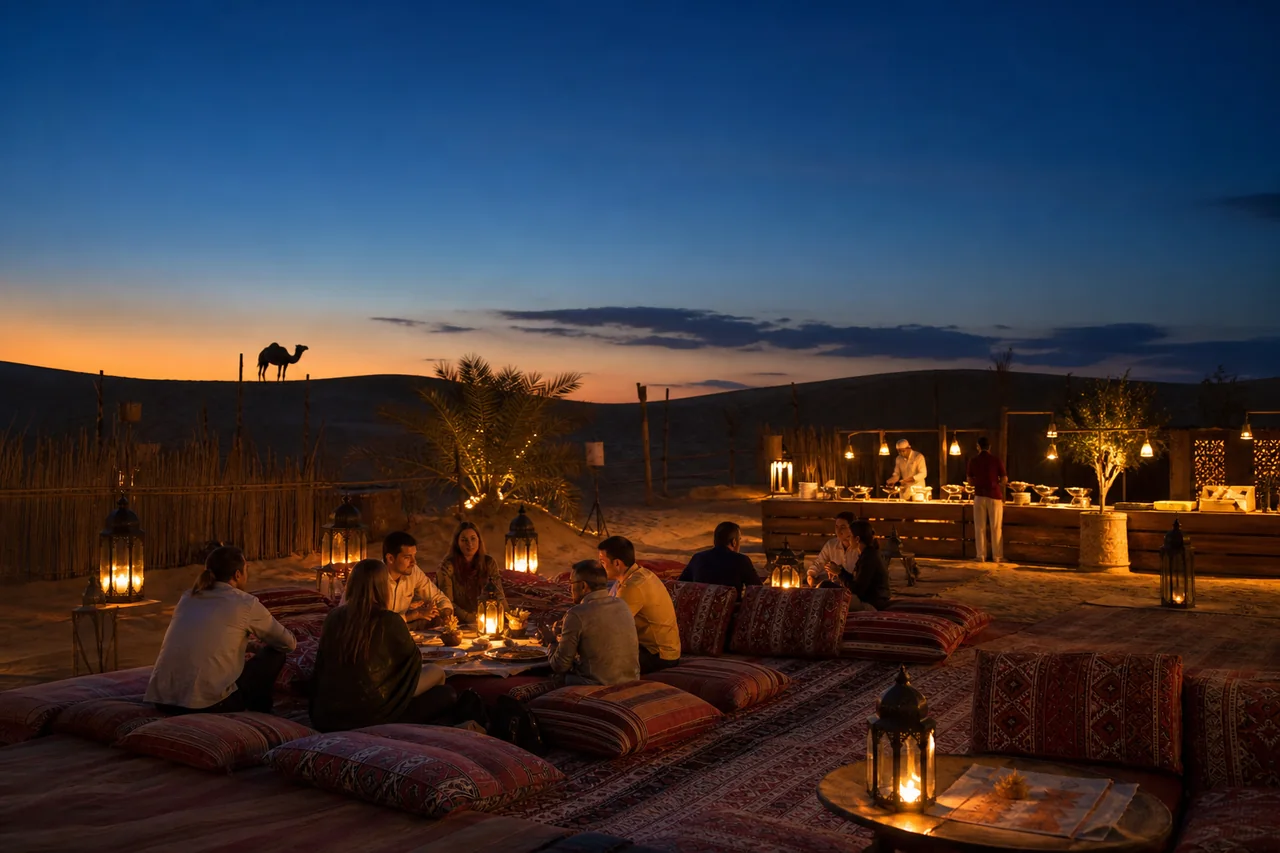
At camp, take pictures of your own party without interrupting other guests' meals or blocking shared routes. Ask before taking close photographs of staff or people outside your group. Keep flashes and equipment use considerate during entertainment, following any instructions from the venue. The setting is shared even when your party arrived in a private vehicle.
If a large group wants a portrait, tell the organiser and ask staff about a suitable moment. Trying to gather everyone during dinner service can create unnecessary confusion. A quick planned picture before or after the relevant part of the programme is often easier. Check the return meeting instruction so photography does not delay the vehicle.
An overnight stay is a different commitment
The overnight safari includes sunrise as part of its simple camp experience. That may appeal to visitors interested in another part of the day, but the booking also involves sleeping arrangements, breakfast and a morning return. Do not choose it solely for a photograph without reading those practical details.
A sunrise view is not automatically a private dawn photography excursion. Ask how the viewing area and morning sequence work for your date. Make sure the sleeping setup and return window suit the party. The best photographic itinerary is still one the travellers are happy to experience when their cameras are put away.
Three photography plans to borrow
A family with one important group picture
The family tells the team that a relaxed group photograph is a priority. At the included stop, they follow staff directions, take the essential picture and then let the children enjoy the view. They do not fill every minute with poses. Their album includes both the planned portrait and small natural moments from the rest of the safari.
A phone photographer on a shared evening
The traveller prepares battery and storage, chooses a few subjects and works within the shared stop. If the light is different from expected, they look for another composition rather than asking the whole vehicle to wait. They return with a coherent record of the day and still have time to enjoy dinner and the camp programme.
Friends considering a dedicated shoot
They want substantial equipment, repeated portraits and a specific creative plan. Instead of assuming a normal private safari covers this, they send the requirements to the team and ask what can be arranged. The answer helps them choose a suitable booking and keeps a photography project from unexpectedly taking over an ordinary shared tour.
Leave room for the view without a screen
After the main photographs, take a little time to notice the landscape directly. Talk to your companions, look at the changing light and enjoy the pause. The pictures will mean more when they remind you of an experience you actually had, rather than an afternoon spent only checking whether every frame matched a reference image.
For help choosing a suitable itinerary, use the contact page with your date, party and photography priorities. This site displays WhatsApp +971 52 757 3085. Ask about the included stop and any special requirements before confirming, then enjoy the photographs that fit naturally into the safari you have arranged.
Make a small album plan
Think of the finished album as a short story: the journey into the desert, a wide view, your companions and a detail from camp. You can collect that sequence without photographing every minute. If one scene is unavailable, another moment can fill its place. This approach is particularly useful on a shared safari because it gives you creative direction while respecting the tour's pace. At the end of the day, choose a few images that remind you of the people and experience rather than keeping dozens of nearly identical frames that you never revisit.
Frequently asked questions
Does an evening safari guarantee a sunset photograph?
A sunset stop is part of the listed evening programme, but the sky, visibility and light depend on conditions. The package cannot promise a particular colour or an image identical to an advertisement. Ask how the stop is planned for your date and keep a flexible shot list. A wider landscape, group picture or closer detail can still create a memorable record when the scene looks different. Choose the whole itinerary because you want to experience it, rather than making the day's success depend on one exact photographic moment.
Is the safari photo stop a private photography session?
Not unless a separate arrangement has been specifically confirmed. A shared tour balances its travellers and follows the operator's programme. The private safari describes greater flexibility and longer photo stops, but that does not automatically make it a professional shoot or provide unlimited time. Explain your requirements before booking if you want substantial equipment, repeated portraits or a dedicated creative plan. The team can then say what is possible. A standard photo stop should be enjoyed within its agreed time and area rather than being turned into an unplanned private production.
Can I take good safari photographs with a phone?
A familiar phone can be enough to make a useful record of the day. Prepare battery and storage, clean the lens and choose a few subjects instead of trying to learn many new settings during the stop. Look at the light and background, then take a few considered pictures. Follow staff directions about where guests may stand. The goal is to remember the outing you actually enjoyed, not to carry the largest equipment kit or reproduce every image from social media while the rest of your group waits to continue.
Should I book morning or evening for pictures?
Compare the complete programmes as well as the part of the day. The morning safari includes a photo stop in a shorter outing without the evening dinner camp and shows. The evening itinerary includes its sunset stop and camp programme. Neither choice guarantees a particular sky or empty background. Think about the travellers' schedule, interests and comfort, then ask the team about the planned stop for your date. A package that fits the party will usually be easier to enjoy than one chosen only for an imagined photograph.
Can I photograph quad biking or camel riding?
Ask the relevant activity team how photographs may be taken and follow its instructions. Do not assume you can hold a phone while participating or that a friend can stand beside an operating route. For camel pictures, follow the handler's arrangement and ask before approaching. Keep the photo plan separate from the activity task unless staff explicitly direct otherwise. If a professional service is offered, check the product and cost. A photograph should fit the permitted activity rather than require staff, riders or animals to work around an improvised pose.
Are professional photos included in the safari?
The standard evening and private safari descriptions exclude professional photography from their included arrangements. If a service is offered, ask what it costs, how many images or prints you receive and how delivery works. Do not assume posing for a sample means you have purchased a package or that every image is a free download. A professional photograph can be an enjoyable optional purchase, but make the decision clearly. You can also use your own camera during permitted stops without buying an additional service simply because it is available at camp.
Can I bring a tripod or several camera cases?
Tell the team about substantial equipment before confirming and ask whether the vehicle, stops and timetable can accommodate it. A passenger booking does not automatically include space for a full production kit or time to set up repeatedly. Keep gear manageable and follow instructions about storage during activities. At camp, avoid blocking shared routes or service areas. The useful equipment is what you can handle comfortably within the actual itinerary. If the kit and shot plan are central to the trip, discuss a suitable arrangement rather than assuming a normal safari covers them.
What should I do if weather changes the photo plan?
Follow the operator's directions and adapt your expectations. Wind, haze or a different sky may suggest a closer subject or a group memory rather than a distant landscape. The activity team may adjust a stop or programme for the actual conditions, and a blog cannot guarantee the original scene. Use your equipment's recommended care instructions and avoid rushed handling in exposed conditions. A flexible approach lets you enjoy the outing even when the photographic result differs from a reference image taken on another date with different light or equipment.
Does the overnight safari include a dawn photography excursion?
The overnight product includes a sunrise view within its simple camp stay, but that should not be assumed to mean a separate private photography drive. Ask how the viewing area and morning sequence work for your date. Read the bedding, facilities, breakfast and return details before choosing overnight, because the commitment is much wider than a single photograph. Conditions still affect the sky. Select the stay only if the whole experience suits your party, including the practical camp arrangement and the time needed to return to Dubai the following morning.
How can a family keep photography relaxed?
Pick one essential group picture, tell the team that it matters and keep the posing brief within the permitted stop. Let children choose whether they are comfortable participating and avoid turning every pause into another photo task. Take a few natural details from the rest of the outing, then put the camera away for part of the view. If a special session is needed, ask before booking. The best family album should remind everyone of a day they enjoyed together, rather than a sequence of instructions and repeated attempts that left the group tired.